
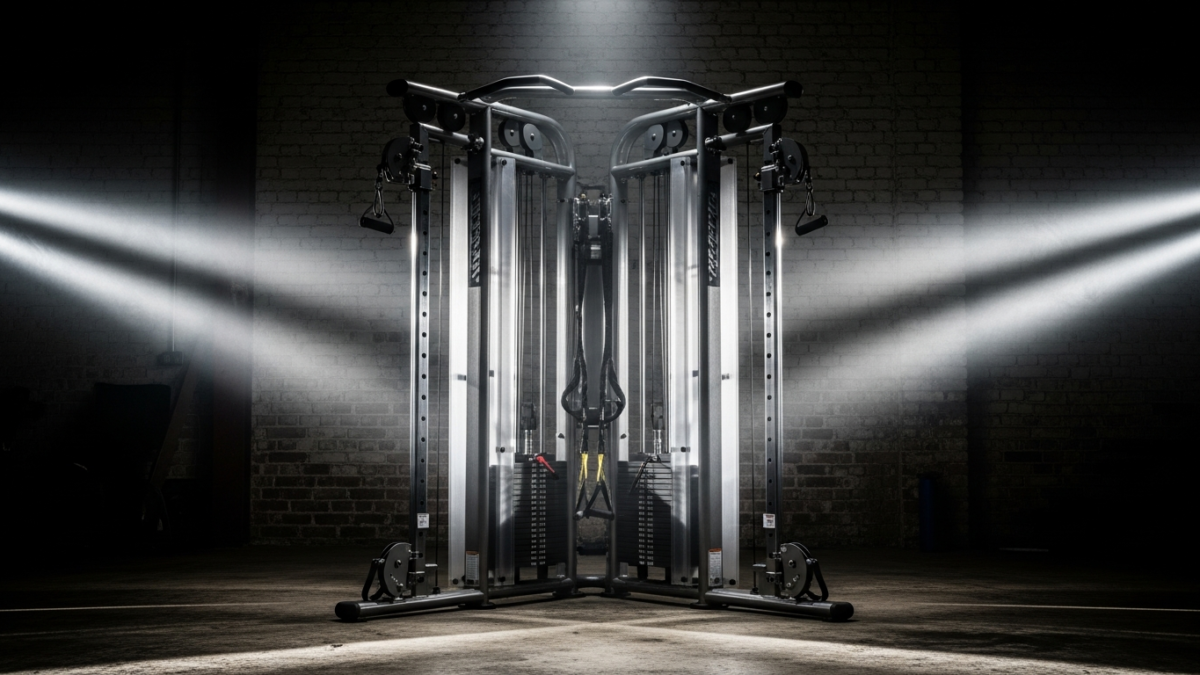
A cable machine is the single most versatile piece of equipment you can add to a home gym. One machine, hundreds of exercises, zero joint-destroying momentum. Whether you’re chasing hypertrophy, rehabbing an injury, or just want something that replaces a $50/month gym membership — a functional trainer earns its floor space.
⚡ Quick Picks
But here’s the problem: the market is flooded with options ranging from $500 wall-mounted pulley systems to $5,000+ commercial units. And if you’re in Canada, half the machines you see recommended on American YouTube channels either don’t ship here or cost 40% more after duties and conversion.
We tested 7 functional trainers across 6 months in Canadian garage gyms. Every machine was evaluated for build quality, pulley smoothness, weight stack range, footprint, and — critically — what it actually costs delivered to a Canadian address. Here’s what’s worth your money in 2026.
⚡ Quick Verdict
Cable Machine vs Functional Trainer vs Cable Crossover: What’s the Difference?
These terms get used interchangeably, but they’re actually different machines:
- Cable Machine (Single Stack): One weight stack, one or two cable stations. Think lat pulldown + low row combo. Limited exercise variety but small footprint. Best for: tight spaces, budget builds.
- Functional Trainer (Dual Adjustable Pulleys): Two independent cable columns with adjustable height positions. This is what most home gym owners want. 100+ exercises, both arms work independently, smooth consistent resistance. Best for: general fitness, bodybuilding, rehab.
- Cable Crossover: Wide-stance frame with cables far apart. Designed primarily for chest flies, but versatile. Requires significant floor space (8-10 ft wide). Best for: dedicated gym rooms, bodybuilding focus.
For most home gyms, a functional trainer is the right call. That’s what all 7 machines in this guide are.
Comparison Table: All 7 Functional Trainers
| Machine | Best For | Weight Stack | Pulley Positions | Dimensions | Price (CAD) | Score |
|---|---|---|---|---|---|---|
| REP Fitness FT-3000 | Best Overall | 2×180lb | 19 | 42″W × 44″D × 83″H | $2,200–$2,600 | 9.4 |
| Bells of Steel FT 2.0 | Best Canadian | 2×150lb / Plate-loaded | 16 | 44″W × 46″D × 83″H | $1,600–$2,200 | 9.1 |
| Titan Fitness FT | Best Value | 2×200lb | 20 | 62″W × 44″D × 84″H | $1,800–$2,200 | 8.8 |
| Rogue CT-1 | Premium Pick | Plate-loaded | Continuous | 48″W × 48″D × 90″H | $3,500–$4,200 | 9.5 |
| Inspire Fitness FTX | Best Compact | 2×165lb | 16 | 38″W × 42″D × 80″H | $2,000–$2,500 | 8.6 |
| XMark Functional Trainer | Budget Pick | 2×150lb | 19 | 44″W × 44″D × 83″H | $1,200–$1,600 | 8.0 |
| Body-Solid GDCC200 | Best Commercial | 2×160lb | 19 | 64″W × 44″D × 83″H | $2,800–$3,400 | 9.0 |
Detailed Reviews
1. REP Fitness FT-3000
🏆 Best Overall

✅ Pros
- Dual 180lb weight stacks — more than enough for most lifters
- 19 pulley positions per column — incredibly versatile
- Multi-grip pull-up bar included
- Rock climbing holds available as accessory
- Attachment peg storage on rear panel
- Smooth, quiet cable action
❌ Cons
- Shipping to Canada can add $300-500
- Assembly takes 3-4 hours (two people recommended)
- Footprint is tight but still needs ~7ft ceiling
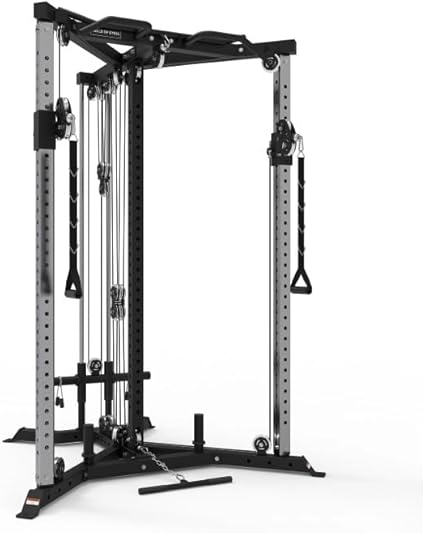
2. Bells of Steel Functional Trainer 2.0
🇨🇦 Best Canadian
✅ Pros
- Ships from Calgary — no duties, no brokerage fees, fast delivery
- Available in both plate-loaded and weight stack versions
- Aluminum pulleys are butter-smooth
- Compatible with their rack attachments (modular system)
- Excellent Canadian customer service and warranty
- Competitive pricing in CAD — no conversion markup
❌ Cons
- Weight stack version maxes at 150lb per side (light for advanced lifters)
- Not as well-known as REP or Rogue
- Some versions require your own weight plates
3. Titan Fitness Functional Trainer
💰 Best Value

✅ Pros
- Dual 200lb weight stacks — heaviest in this price range
- 20 pulley positions per side
- Heavy-gauge steel construction
- Aggressive pricing — often $400-600 less than competitors with similar specs
- Includes lat bar, straight bar, and D-handles
❌ Cons
- Pulley smoothness isn’t as refined as REP or Rogue
- Wider footprint (62″ wide) — needs more room
- Customer service is hit-or-miss
- Shipping to Canada requires freight — plan for delivery logistics
4. Rogue CT-1 Cable Tower
👑 Premium Pick
✅ Pros
- Made in USA — Rogue quality is legendary
- Continuous cable adjustment (not fixed positions)
- Plate-loaded — limitless resistance scaling
- 7-gauge steel construction — this thing is a tank
- Lifetime warranty on frame
- Smoothest pulleys we’ve ever tested
❌ Cons
- $3,500+ CAD before plates and shipping
- Requires Olympic weight plates (not included)
- Extremely heavy — installation is a two-person job minimum
- Needs 90″ ceiling clearance
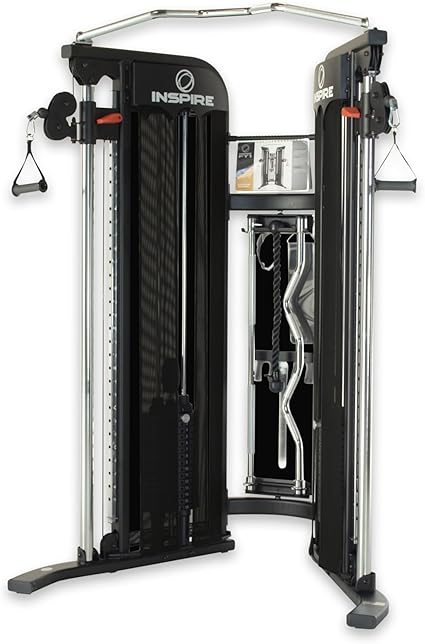
5. Inspire Fitness FTX
📐 Best Compact
✅ Pros
- Smallest footprint in this roundup — only 38″ wide
- Dual 165lb weight stacks are still plenty for most users
- Clean, modern design that doesn’t look like industrial equipment
- Smooth pulley system with minimal friction
- 80″ height works in low-ceiling basements
❌ Cons
- Limited accessories included — you’ll need to buy handles separately
- Not as robust as full-size units for heavy compound work
- Price-to-weight-stack ratio isn’t the best
6. XMark Functional Trainer
🏷️ Budget Pick
✅ Pros
- Under $1,500 CAD — most affordable functional trainer worth buying
- Dual 150lb weight stacks
- 19 cable adjustment positions
- Includes basic accessories (D-handles, ankle strap)
- Adequate for general fitness and light bodybuilding
❌ Cons
- Pulley friction is noticeable — not as smooth as premium options
- Paint quality can chip in first year
- Weight stack cables may need replacement after 2-3 years
- Limited upgrade path
7. Body-Solid GDCC200
🏢 Best Commercial-Grade

✅ Pros
- In-home lifetime warranty — Body-Solid backs everything they sell
- Commercial-grade construction used in actual gyms
- Fiberglass-reinforced nylon pulleys are nearly indestructible
- Smooth, consistent resistance throughout range of motion
- Well-established brand with 30+ years in fitness equipment
❌ Cons
- 64″ wide footprint — needs dedicated space
- Dual 160lb stacks (adequate but not the most)
- $2,800+ CAD is steep
- Heavier and harder to move than modular designs
Space Requirements Guide
Before you buy, measure your space. Here’s what each machine needs including working clearance (room to actually use it):
📐 Minimum Room Dimensions (Width × Depth × Height)
- REP FT-3000: 7′ W × 7′ D × 7′ H — compact but needs pullup clearance
- Bells of Steel FT 2.0: 7.5′ W × 7′ D × 7′ H — similar footprint, slightly wider
- Titan Fitness FT: 8.5′ W × 7′ D × 7′ H — wider frame needs more lateral space
- Rogue CT-1: 8′ W × 8′ D × 7.5′ H — needs the most ceiling clearance
- Inspire FTX: 6.5′ W × 6.5′ D × 6.8′ H — smallest footprint, best for low ceilings
- XMark FT: 7.5′ W × 7′ D × 7′ H — standard size
- Body-Solid GDCC200: 9′ W × 7′ D × 7′ H — widest, needs the most room
Pro tip: Add 3-4 feet in front of the machine for exercises like cable flies and face pulls. A bench in front adds another 5 feet of depth. Plan for 8-10 feet of total depth for a comfortable setup.
Accessories Worth Adding
Most functional trainers come with basic D-handles, but here’s what serious lifters add:
- Tricep rope ($20-30): Essential for pushdowns and face pulls. Get a 36″ rope, not the standard 28″.
- Straight bar ($25-40): For curls, pushdowns, and rows. Look for rotating attachments to save your wrists.
- V-bar ($20-30): Neutral grip rows and pushdowns. A must for back training variety.
- Ankle strap ($15-20): Cable kickbacks, leg curls, hip abduction. Most machines include one — buy a second for supersets.
- MAG grips ($60-100): Maximum Advantage Grip handles. Expensive but transformative for back training. The single best cable accessory upgrade.
- Lat pulldown bar ($40-60): If your machine has a high cable position, a proper lat bar opens up pulldowns and overhead work.
Budget $100-150 for accessories on top of the machine cost. It’s worth it — the right attachments multiply the exercise variety of your trainer.
Final Verdict
The REP Fitness FT-3000 is the best functional trainer for most home gym owners. Dual 180lb stacks, 19 pulley positions, a built-in pull-up bar, and a compact footprint make it the benchmark. If you can stomach the shipping cost to Canada, it’s the one to beat.
But for Canadian buyers specifically, the Bells of Steel Functional Trainer 2.0 makes a compelling case. Ships from Calgary, no duties, excellent warranty, and a modular design that integrates with their rack system. If you’re building a Bells of Steel ecosystem, this is the obvious choice.
On a tight budget? The Titan Fitness Functional Trainer gives you dual 200lb stacks and 20 pulley positions at a price that undercuts nearly everyone. The pulleys aren’t as smooth as premium options, but the value is undeniable.
And if money is no object, the Rogue CT-1 is commercial gym equipment in your garage. It’s plate-loaded, made in the USA, and comes with a lifetime warranty on the frame. You’ll never outgrow it.
Related guides: Best Home Gym Equipment Canada 2026 | Best Squat Racks for Home Gym | Best Weight Bench 2026
Frequently Asked Questions
The REP Fitness FT-3000 is our top pick overall, with dual 180lb weight stacks and 19 pulley positions. For Canadian buyers specifically, the Bells of Steel Functional Trainer 2.0 ships from Calgary with no duties, making it the best value when you factor in total delivered cost.
Budget $1,500-2,500 CAD for a quality functional trainer. Under $1,500 gets you basic machines with compromises in pulley smoothness. The $2,000-2,500 range is the sweet spot where you get dual heavy stacks, smooth pulleys, and solid construction. Above $3,000 enters commercial-grade territory.
They complement each other. Free weights (barbells, dumbbells) are better for building maximal strength and are cheaper per pound of resistance. Cable machines excel at isolation work, rehab, constant tension training, and exercise variety. The ideal home gym has both — a rack with barbell and a cable machine.
Plan for a minimum of 7 feet wide × 8 feet deep × 7 feet tall for most functional trainers. The Inspire FTX is the most compact (6.5′ × 6.5′ × 6.8′), while the Body-Solid GDCC200 needs the most room (9′ × 7′ × 7′). Always add 3-4 feet in front for exercise clearance.
Weight stack trainers are more convenient — just move the pin. Plate-loaded trainers offer unlimited resistance scaling and are usually cheaper, but require you to buy and load plates. If you already own Olympic plates from a barbell setup, plate-loaded is a great value play. Otherwise, weight stacks are worth the convenience premium.
For most people, yes. A functional trainer gives you 100+ exercises covering every muscle group. Combined with a bench and some dumbbells, you can replicate 90%+ of what a commercial gym offers. The main things you’ll miss are heavy barbells, specialized machines (leg press, hack squat), and the social atmosphere.
Cable ratio refers to how much weight you actually move versus what’s on the stack. A 1:1 ratio means 100lb on the stack = 100lb at the handle. A 2:1 ratio means 100lb on the stack = 50lb at the handle (but with smoother motion and greater range). Most functional trainers use a 2:1 ratio. Check the ratio before comparing weight stacks between brands.
Minimal maintenance. Spray silicone lubricant on the guide rods every 3-6 months, wipe down pads and handles after use, and inspect cables annually for fraying. Quality machines (REP, Rogue, Body-Solid) will last 10-20+ years with this basic care. Budget machines may need cable replacements after 2-3 years of heavy use.